


Overview Features
Integrates Physics Simulation, Graphics, Sound and Music
Matali Physics integrates physics simulation, graphics, sound and music into one total multimedia solution where creating complex interactions and behaviors is common and relatively easy. Unlike other solutions, Matali Physics is entirely based on 3d physics simulation and physics-driven technologies. Every visual element, starting from scenes and animations to GUI, cursors, text, etc., is created and controlled by the 3d physics engine. The environment ensures that all objects are affected by forces and all objects can change their state. Simulated objects of any size and their hierarchies can be animated in real time for amazing experiences and interactions. AIs described by simple dependencies lead to very complex behaviors. Tones of sounds can be changed in real time depending on the parameters of objects and the surrounding environment. The arrangements of all or selected tracks of background music can be changed in real time with the transformation of the appearance and behavior of objects. The environment introduces specialized, physics engine-based architectural pattern of the application structure, so you always have full control over the project, regardless of whether you create simple scenes or worlds composed of thousands of objects, dependencies and logics.Composed of Dedicated Modules That Do Not Require Additional Licences and Fees
The environment consists of modules specially designed for its needs that do not require additional licences and fees. Matali Physics Core, Matali Render, Matali Content, Matali Sound and Matali Synth are advanced, modern, multi-platform, high-performance engines dedicated to specific applications, which can also be used as separate libraries. Matali Games is also qualified as a module, but has a different function. It is an advanced, modern, multi-platform, high-performance intermediate layer that allows Matali Physics Core to communicate with other modules, and defines applications of the environment. Matali Games is provided as a set of complete projects dedicated to supported platforms and IDEs (with full specific and shared C++ source code), which can then be compiled into executable files. Matali Games can contain many sets of projects. Currently available is the main set under the name Matali Physics Game.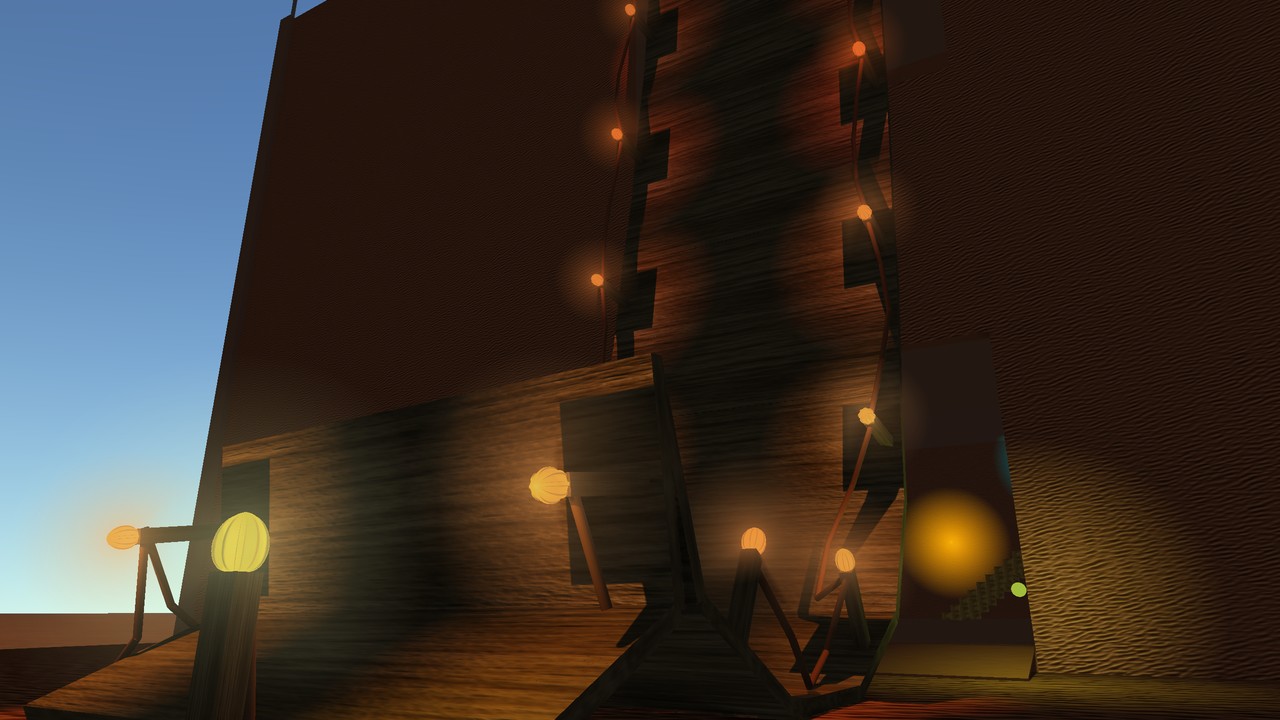
Supports Fully Dynamic and Destructible Scenes
Matali Physics supports fully dynamic and destructible scenes in which all objects can move, change and transform. In the extreme case, the entire physics scene can be animated and destroyed. The environment offers groups of objects with advanced modeling of their destruction process, convex decomposition, breakable constraints, movable action and force fields with ranges defined by any primitive shapes, directly animated and controlled large-scale objects, so large that can be considered as some separate, complex explorable areas, movable animated large-scale fluid surfaces with volumes, movable fluid volumes, triangle meshes and large-scale heightmaps deformable in real-time. All physics objects, groups of physics objects, and groups of physics objects with constraints can be scaled in real time with correct, automatic recalculation physical parameters and constraints. All groups of physics objects and groups of physics objects with constraints may be subject to destruction process during real-time scaling, allowing group members to break off at different sizes.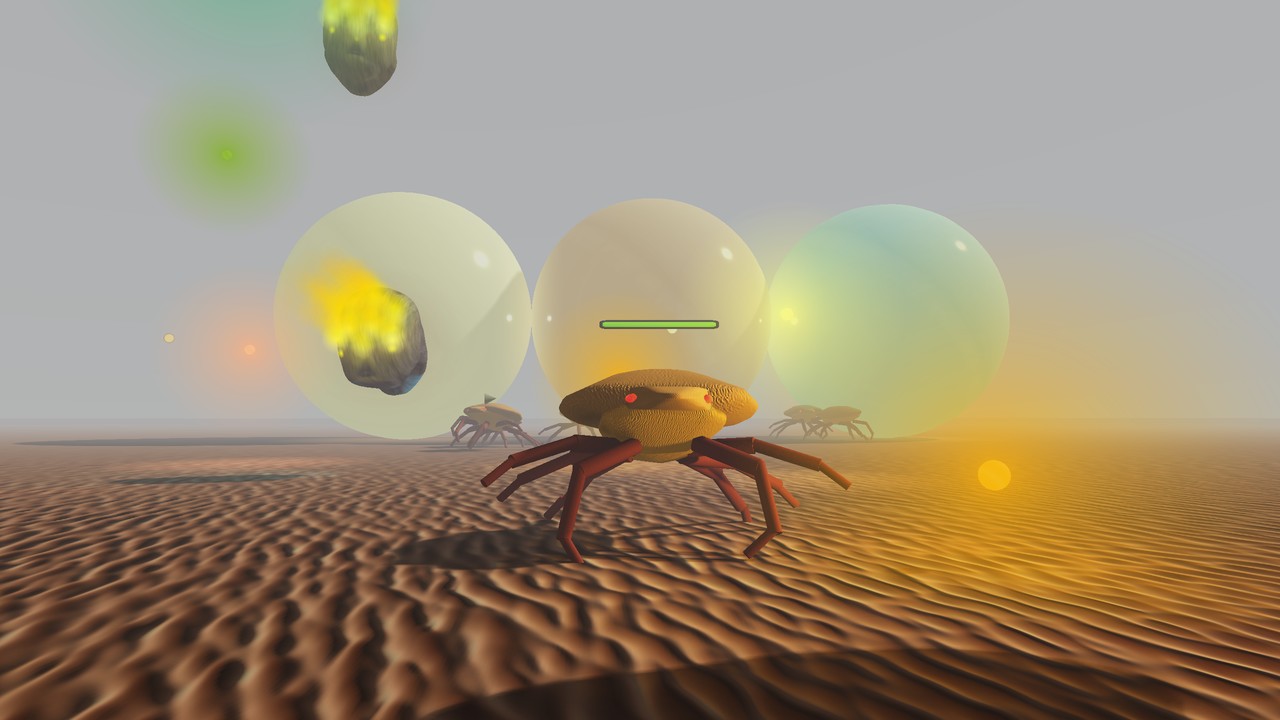
Supports Physics-Based Behavioral Animations
Matali Physics allows you to create advanced, physics-based behavioral animations of any complexity. You can easily create natural, arbitrary motion sequences that do not require the use of separate inverse kinematics systems and data derived from motion capture systems. Every physics object can analyze surroundings and determine what it sees. You do not need to specify every detail of object's motion, giving the animated object the ability to improvise and determine its own actions, of course to a certain extent. The environment offers constraints control (distance and angles) and constraints modeling through an additional deformation mode.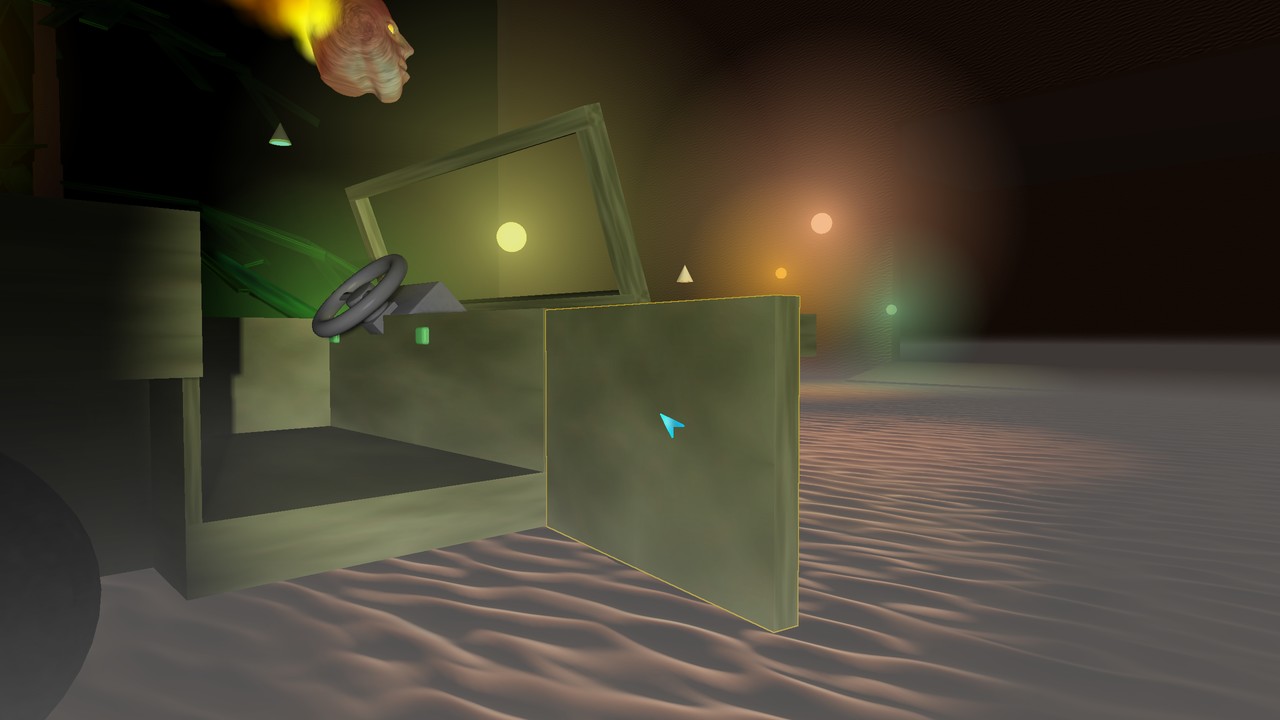
Supports Physical AI, Object Motion and State Change Control
Matali Physics allows you to implement effective navigation and wayfinding algorithms in a dynamically changing environment without the need for navigation maps, navigation meshes, predefined motion paths or spline functions. You can easily manage motion and state changes of objects through a powerful mechanism of user controllers, a rich set of internal controllers, programmable activation/deactivation strategies, parametric action fields, state machines, neural networks and custom logic. Support for force-feedback, switches, ray casting, action fields, volume queries, lifetime maintenance make it easy to control the advanced interaction of objects. If you would like, you can also create, visualize and use predefined movement paths through their integration with action fields. The environment also allows you to create reusable AI algorithms that can be connected to various physics objects or sets of physics objects.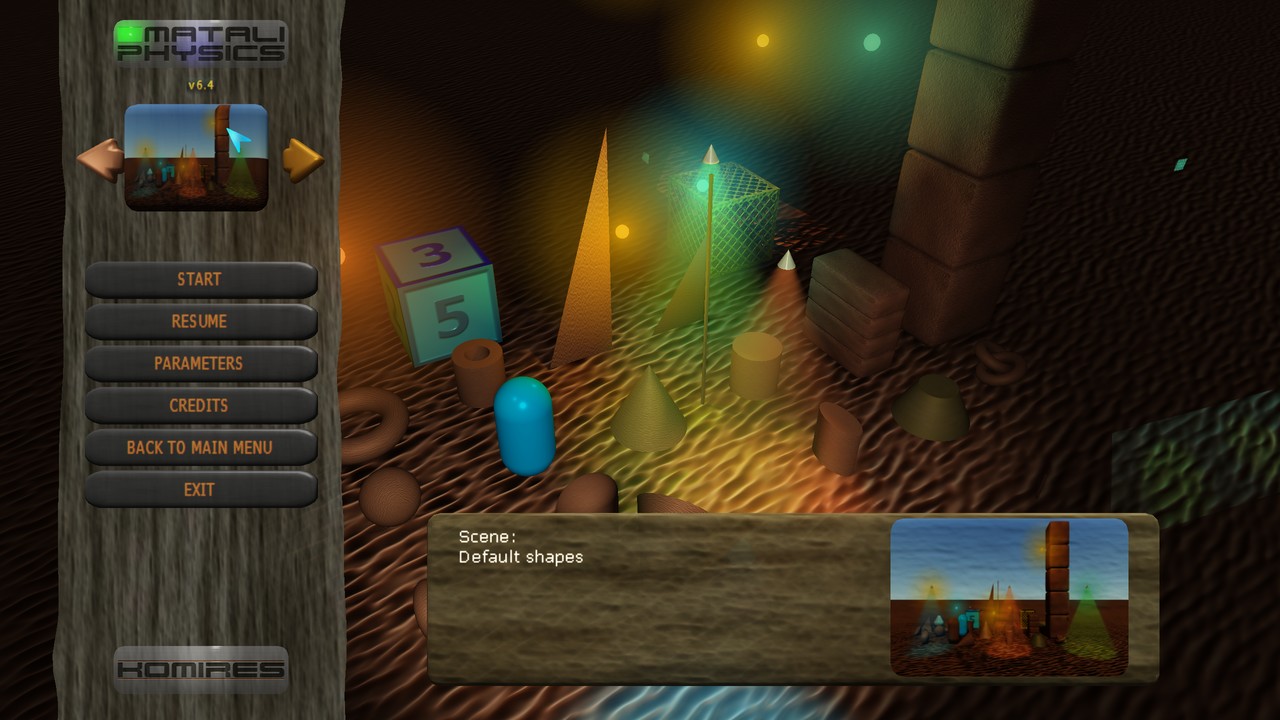
Supports Physics-Based GUI
Matali Physics allows you to create advanced, physics-based graphical user interface (GUI) of any complexity with full text localization. You can easily create windows, buttons, custom controls, where only the physics environment is responsible for their overall processing. Each element of the physics-based GUI can be animated and its properties can change in real time. The physics-based GUIs, unlike standard graphical user interfaces, are physics scenes that allow for amazing, unique behaviors and special effects. GUI scenes are essentially the same as other physics scenes in the environment and therefore do not require separate GUI modules.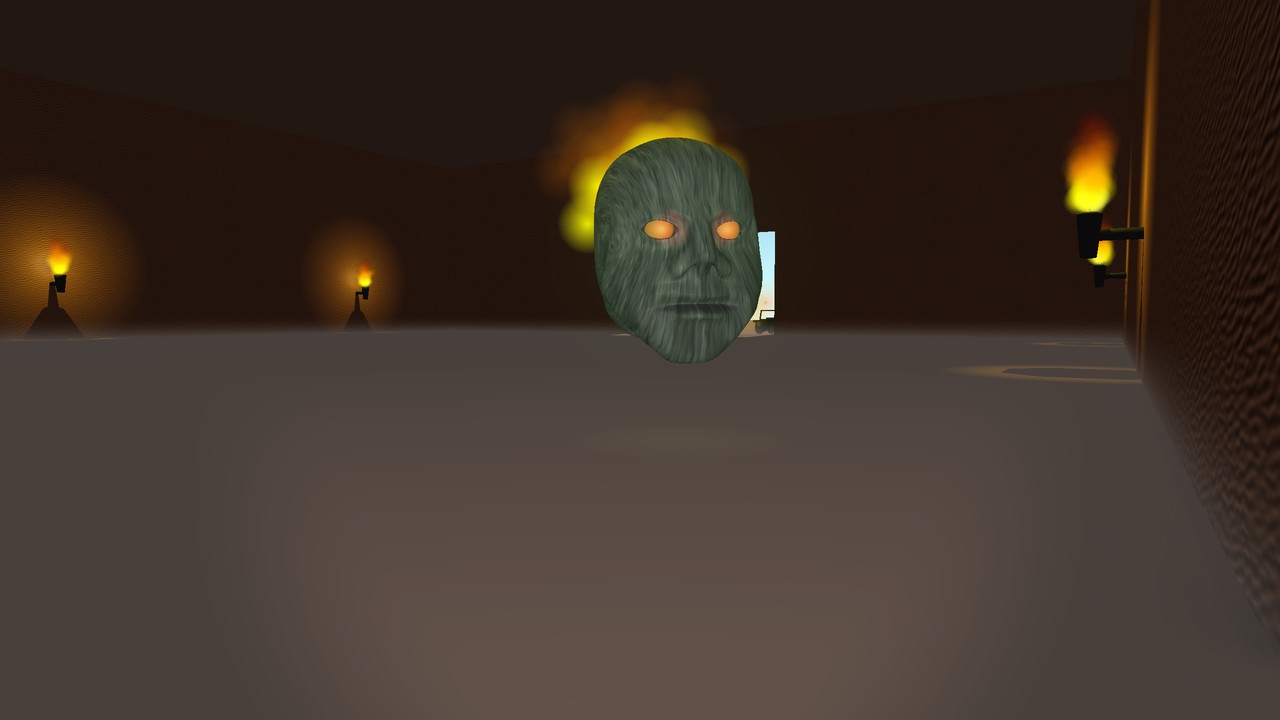
Supports Physics-Based Particle Effects
Matali Physics provides physics-based generic particle system in which you can simulate moving fluids, smoke, dust, flames, magic spells, and a whole range of other effects. The environment offers approach that is not limited to predetermined templates or modules, introduces advanced particles management as well as full integration with the lighting, shading and fogging system. Provided generic particle system is fully physics-driven, enables collision handling and filtering, inter-particle interactions, lifetime and other parameters maintenance.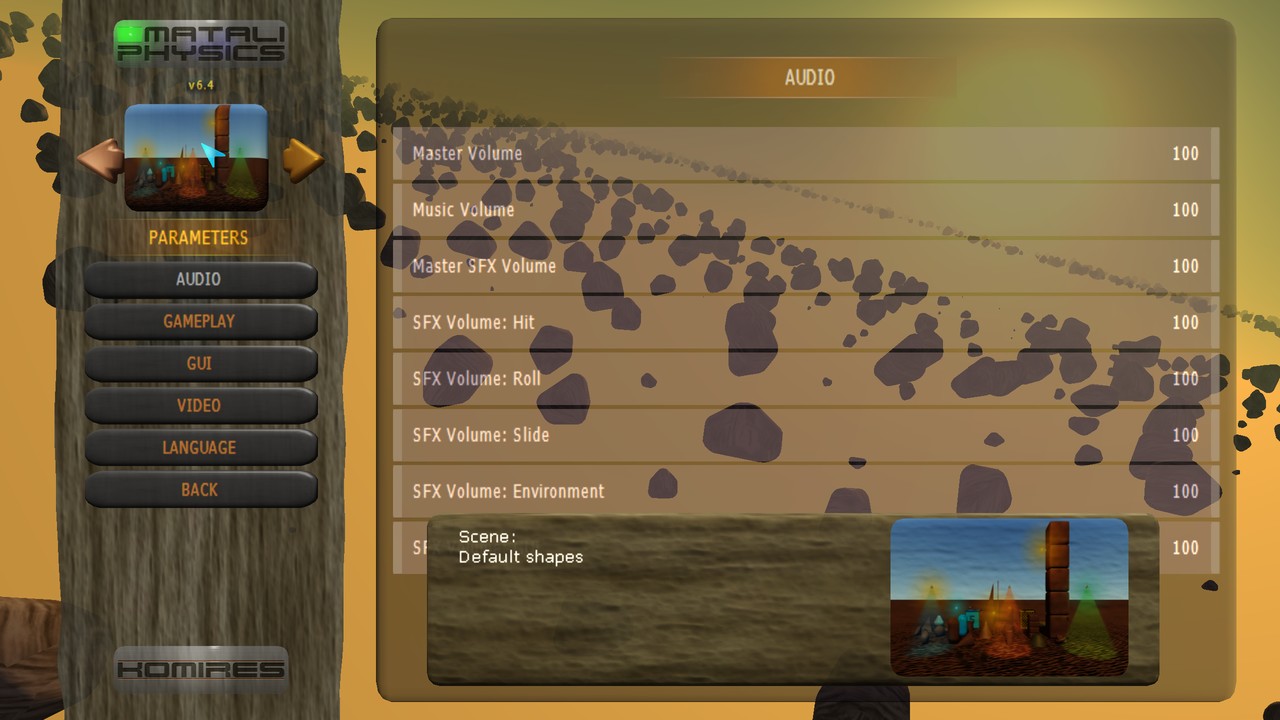
Supports Multi-Scene Physics Simulation and Scene Combining
Matali Physics allows you to use multiple physics scenes to manage complex physics compositions. In particular, you can process independent physics scenes with different physics and visual properties combining results into a single view. The result of combining includes not only the simulation but also all other parameters, including those related to visualization, sound and music. Together with dynamic system of lighting, shading and fogging, dynamic sound and music, the achieve combining results are unbelievable, simply breathtaking.
Supports Physics-Based Photo Mode
Matali Physics provides ready-to-use, physics-based photo mode where any physics scene element can be frozen in state and motion. All lights, shadows, fog, characters, fluid surfaces, particle effects, animations, and controllers can be paused and then seamlessly resumed so players can capture the best-looking shots. The provided solution allows players to pause the game mid-action and freely move an external camera within a some sphere around, take screenshots directly from the game itself, also in conjunction with the graphical user interface (GUI), as well as use any of the GUI options to adjust the photo parameters.Supports Physics-Driven Sound
Matali Physics provides all data needed for audio playback during hitting, rolling and sliding of physics objects, as well as data necessary to play sounds related to the behavior of objects. Matali Physics Game demo shows complex scenes in which all sounds are controlled by the physics environment.Supports Physics-Driven Music
Matali Physics provides mechanisms needed for music synthesis, as well as mechanisms necessary to play music modulated by the behavior of objects or changes in the surrounding environment. You can easily create amazing, completely dynamic, malleable, changeable over time and according to situation musical arrangements. Matali Physics also provides advanced, studio-quality, hardware-independent, real-time rendering of music imported from standard MIDI files to make your games stand out from the crowd and always deliver the same amazing music experience to players across platforms. Matali Physics Game demo shows complex scenes in which real-time rendered music is controlled by the physics environment.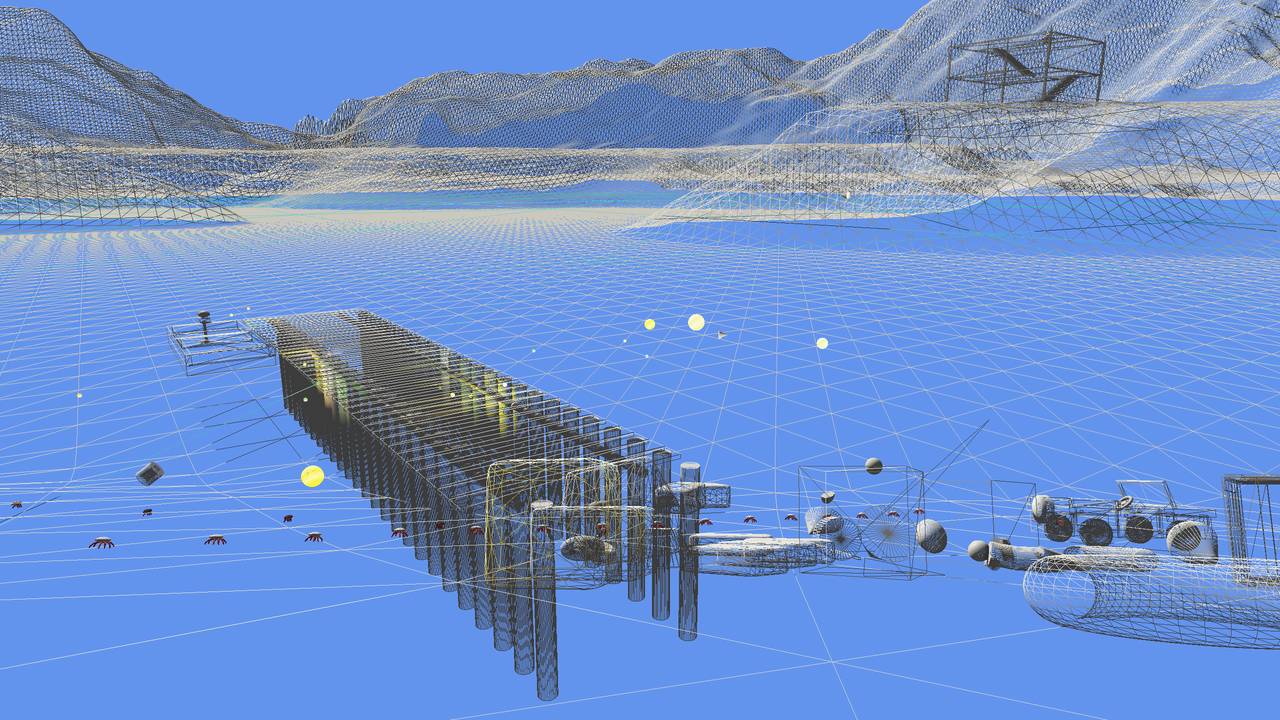
Supports Debug Visualization
Matali Physics provides full support for user-defined debuggers as well as offering built-in mechanisms required for custom debugging. Sample visualizations of object wireframes, sleeping objects, object names, bounding boxes, contact points, lights and impact factors are included in Matali Physics Game set. Matali Physics Game set also includes sample visualizations of scene statistics and visualizations of additional information describing the scenes.Fully Serializable and Deserializable
Matali Physics offers advanced serialization and deserialization. All information describing physics scene elements: simulation parameters, physics objects (with materials, cameras, controllers, fog sources, light and sound sources, contact points, etc.), shapes, primitive shapes, constraints, and meshes can be serialized to easily parsable XML data and then deserialized. Available serialization and deserialization allow you to save and load entire physics scenes "on the fly", and at any time.Frequently Asked Questions
- What is a 3d physics environment?
- 3d physics environment is a total multimedia solution integrating physics simulation, graphics, sound and music into a single whole, driven solely by 3d physics simulation in every aspect.
- Is Matali Physics a ready-made solution or a group of modules?
- Matali Physics is a ready-made solution. The modular architecture of the environment minimizes the risk of introducing errors into the entire system when improving individual modules, ensuring independence, encapsulation, replaceability, ease of testing and development.
- Does Matali Physics use an ECS (Entity-Component-System) pattern?
- Matali Physics does not use an ECS and relies on a unique fractal pattern developed for the needs of a 3d physics environment. Specialized, physics engine-based architectural pattern of the application structure ensures that you always have full control over the project, regardless of whether you create simple scenes or worlds composed of thousands of objects, dependencies and logics.
- How does the 3d physics environment differ from other solutions?
- Unlike other solutions, 3d physics environment is entirely based on 3d physics simulation and physics-driven technologies. Every visual element, starting from scenes and animations to GUI, cursors, text, etc., is created and controlled by the 3d physics engine.
- Are there any other 3d physics environments?
- Until 2020, the phrase "3d physics environment" was used in a limited and general way. In 2020 with the release of Matali Physics 5.5, Komires Sp. z o.o. company introduced conceptual innovation and a new meaning for it. In this new meaning the term "3d physics environment" describes a unified multimedia architecture, where physics simulation is the central organizing principle, and all other systems are subordinate to it. The only implementation of "3d physics environment" in the new meaning is Matali Physics environment.
- What is the difference between 3d physics engine and 3d physics environment?
- The main difference is that 3d physics engine simply simulates 3d physics, while 3d physics environment is a total multimedia solution integrating physics simulation, graphics, sound and music into a single whole, driven solely by 3d physics simulation in every aspect. In summary, the range of applications of the 3d physics environment is significantly larger than the 3d physics engine as well as the role of physics simulation differs significantly in both solutions.
- What is the main difference between: 3d physics engine, 3d physics environment and 3d game engine?
- These three terms are often incorrectly used interchangeably, but refer to solutions that differ significantly:
• A 3d physics engine is computer software that provides an approximate simulation of certain 3d physical systems.
• A 3d physics environment is a total multimedia solution integrating physics simulation, graphics, sound and music into a single whole, driven solely by 3d physics simulation in every aspect.
• A 3d game engine is a software framework primarily designed for the development of 3d video games which generally includes relevant libraries and support programs.
The main difference is the role of 3d physics simulation and the range of applications of a given solution. In the 3d physics environment, physics simulation is a key element of the system, not one of many hosted element. We would like to point out that the 3d physics environment is not a 3d game engine - the 3d physics environment can be used to create 3d computer games, in this aspect it resembles a 3d game engine, but this is one of many applications. For example: 3d physics environment naturally creates GUI (Graphical User Interface) without any additional solutions, modules or libraries.